
a major Observe Card Based Design
Posted on June 8, 2014 at 12:12 pm
Cards. You’ll be unfamiliar with the term, but you’re for sure acquainted with the idea. Cards are ubiquitous in website design at the moment, and the craze looks catching on. Correctly, the revered web trinity of Google, Twitter, and Facebook are all doing it, so it ought to be worth at the least a cursory look. But, because we don’t cherish to do shallow here, let’s dive straight in.
What are Cards?
Simply answered, cards are packages of interactive information, usually presented inside the shape of a rectangle. Similar to charge cards or baseball cards, web cards provide quick and related information in a condensed format.
The hallmark of all cards is interactivity. Not just do they supply information, but they politely demand engagement. Cards commonly include like buttons or how you can post to social media.
What Cards Are Not
Because the term “card-based” is in its infancy, there’s loads of haze and confusion about what’s and isn’t a card. Adding to the path of uncertainty is the truth that not everyone calls it a card. A card is additionally called a tile, a module, or a portrait, simply to name a number of.
Sometimes, it’s easier to define something but ruling out what it isn’t. A card isn’t strictly a design. You can’t simply have a page, draw boxes on it, and contact each box a card. Well, you may, but it surely wouldn’t fit the definition posited the following article. Instead, a card should have functionality, be self-contained, and probably flippable.
Now’s the ideal time to bring Dr. Phil into this. He famously said that regardless of how flat you’re making a pancake, it still has two sides. That’s view cards- they must have two sides. It might probably not be that the cards have an animated flip, but rather each card presents an outline of data and provides you the choice for further involvement. A card is not only one piece of data, always embedded is the invitation to do more.
Following this definition, a card can’t just be pretty; it needs to be useful.
Why In the event you Use Cards?
Cards may be used in various how to satisfy specific functions. Listed below are the principle reasons to introduce cards into your design:
Cards grab attention. They’re a thrilling alternative to overly gratuitous text.
Cards are responsive. Designing for mobile browsers is a need, and cards are great for responsive design.
Cards are digestible. On account of their limited space, cards can’t really say much. But that’s an excellent thing! Readers who want more can click to get it.
Cards are shareable. Cards enable users to quickly and simply share bursts of content across social, mobile, and email platforms.
How If you happen to Use Cards?
The main point of cards is to have interaction with the user and prompt that user to action.
The form of action will vary, looking on the connection you’d want to foster together with your traffic. To reply to this query to your own site, placed on your UI/UX hat, and call to mind how you’d desire to interact together with your visitors and the way they’d desire to interact with you.
Let’s have a look at 4 major players who use cards. There’s some powerful takeaways from each.

The feed on Facebook is card-based. Each card features content, the way to like, share, and add comments. It also adds in social proof. You will find what number of others liked, shared, or commented, that may influence your engagement. Quietly tucked out of ways is a drop menu that provides you the choices to cover, unfollow, and report spam.
The Takeaway: Clearly, Facebook is prompting users to positively engage and to remain connected. They don’t want you to give thought unfollowing or hiding certain cards out of your feed.
You can use cards in much the identical way-set cards as much as encourage positive interaction.
Google Now

We already know that Google is a champion of card-based design. Many apps in its infrastructure already feature cards, together with Gmail Promotions and Google Glass. Google Now takes it one step further by being completely card-based. This offering is a virtual personal assistant who reminds you of friends’ birthdays, checks local traffic and weather, tells you what to look at on tv.
The Takeaway: Most cards require action, akin to snooze, view email, wish happy birthday. Implementing a choice-to-action on the bottom of your card can improve visitor engagement because you’re guiding them down a path of action.

You knew it was coming! Pinterest features one of the vital popular card-based designs ever. It’s spurred numerous imitators. Pinterest is a visible pinboard that permits users to pin, or add, images onto virtual boards. Hovering over a card gives users the choice to pin it, send it, find it irresistible, or edit it (if it’s already saved for your pin board). Clicking the pin offers you more options, including the facility to go to the web site of the picture.
The Takeaway: Hover options are smart way to solicit action without obscuring the card’s image.
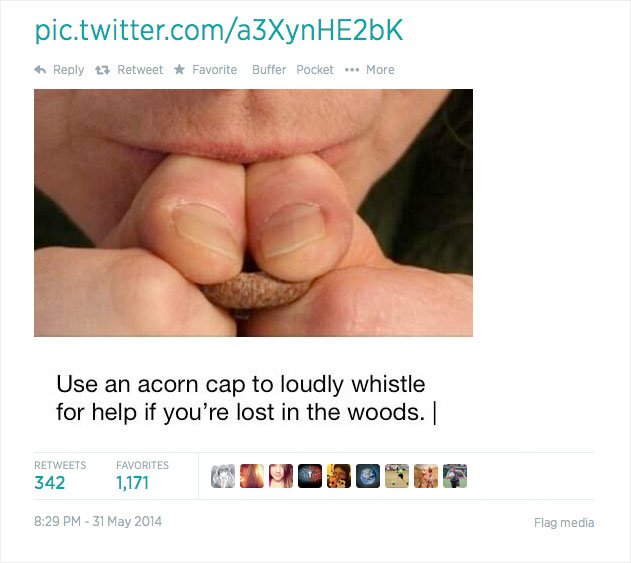
Twitter cards are tweets with rich media attached to them. The media may be a photo, a suite of 4 photos, a video, or an audio, simply to name some . These visual cards attract attention in an endless sea of texts and #hashtags.
The Takeaway: Front and center, Twitter encourages replies, retweets, and favoriting but, very similar to Facebook, it obscures the negative actions, comparable to mute and block. Similarly, for your card design, focus totally on what you’d like people to do most.
6 Great Examples of Card-Based Design
Now that you’ve seen how titans of industry use cards of their designs, it’s time to watch how everyday designers like me and also you incorporate cards into their work.

Roman Shkolny’s imagined mail client interface uses cards to visually catalog emails. On this example, emails may be stacked into conversations. Hovers allow color tagging, reply, forward, delete, and more options.

Move Product by Barthelemy Chalvet features highly animated cards that may be selected, deleted, or saved for later viewing. Pop-up cards provide further prompts for the user.

Coke’s Ahh.com campaign includes a bevy of card, some rectangular, but most square, some animated but most stationary. As you click each card, it flips over to supply two calls-to-action: add to playlist or play this now.

Popular designer hangout, Dribble, includes a card-based design. The cards provide insight on what number of viewers clicked a card, what percentage liked it, and the way many comments are listed. When users hover over the cardboard, a short summary of the picture is shows, in addition to the upload date.

Silktricky is one among my favorite card-based designs because it’s just plain fun. Interacting with the cards and watching them reply to your selections makes the full design feel intuitive.

Vox gets into the cardboard game with a what they check with as card stacks. Such as slide-shows, card stacks provide a comprehensive amount of knowledge a couple of particular subject. Each individual card is devoted to reply one particular aspect of the topic. Cards are shareable and, due to their truncated size, also are easily consumable.
Conclusion
Cards are the ideal option to make your design glanceable, user-friendly, and responsive. They definitely deserve your consideration.
Now that you’ve been conversant in card-based design, will you be implementing it into your design?
Posted in Web Design