
In RWD We Trust – Is that this trust misplaced?
Posted on November 18, 2013 at 1:42 pm
Everybody’s talking about responsive website design (RWD). The excitement surrounding this designing approach is humongous and just refuses to head down. Every business regardless of its size, who desires to get an internet site developed, wants its site to be responsively designed. Businesses that have already got an operational website have become it redesigned to make it responsive. It’s just like RWD has emerged because the savior that’s going to rid websites from the evils of accelerating bounce rate, low customer connect, decreasing revenue generation and rapidly declining brand awareness.
Most people think RWD equals website success and improved brand awareness for his or her business. But things aren’t as simple and easy as them seem. Implicit trust in RWD can often be misplaced. This statement might come as a surprise to you, but it’s the fact. RWD is truly not the be all and end all of a successful online identity. It will possibly work for some and can not deliver at the expectations of others.
So the question to invite this is, why is the fanboyish trust in RWD misplaced? Let’s take a better look.
 Image by Claudiu Cioba
RWD at its most basic
For purposes of this text, let’s just explain RWD at its most elementary level. Responsive website design ensures your website renders effectively on all devices, no matter their size and screen resolutions. You don’t must create different web designs for various devices. Its fluidity ensures it could fit into any screen size and display content that have been earmarked for that size.
Now, let’s discover why RWD doesn’t always work.
RWD isn’t the answer in case your audience isn’t a mobile web enthusiast
Let’s take an example of a web site catering to the demands of senior citizens, say an internet site selling assistive devices. For that reason, a sizable component of the website’s audience isn’t going to access this website through their mobile devices. So, it doesn’t make plenty of sense to head in for RWD. However, going for RWD would possibly not take anything far from your site. But, on this particular case, a responsive website will possibly not make an excessive amount of sense. So, why opt for it. RWD doesn’t come cheap because it requires expertise in specific website design technologies like CSS3, media queries and HTML5. As a business, if you would like your RWD investment to give the required returns, you should ensure that an enormous percentage of website users will utilize the mobile web to access your site. In the event that they don’t, RWD can become a wasted expense.
RWD isn’t a good suggestion if content appearing on smaller devices doesn’t add any value
Just the undeniable fact that your website renders effectively on mobile devices doesn’t result in improved brand awareness, which in turn translates into improved traffic and higher conversions to your site. If the content offers no real value to the user, your site isn’t going in finding traction on mobile devices. The purposes of mobile users are different from that of desktop users. Contextual content is the main to leveraging the immense potential of RWD. But, if the web site content displayed on mobile devices doesn’t satisfy the contextual requirements of the objective users, why have RWD within the first place. Subsequently, it really doesn’t deliver lots of value by any means or form.
These two pointers illustrate the truth that RWD isn’t the answer for all of your problems, but in these two particular cases the fault lies at the website owner greater than anybody else, for failing to attain the opportunity of RWD.
Now, let’s take a look at the misplaced trust angle purely from RWD’s inability to face as much as scrutiny.
RWD websites typically shouldn’t have fast loading times
There is that this false belief that because a domain was responsively designed, and it displays far less content on mobile devices that the positioning will load faster on mobile devices. It is a wrong assumption to make because the download size of the web site doesn’t dramatically reduce simply because it’s accessed through a mobile device.
We all know the notorious impatience of traditional internet users, and mobile web users are a step ahead in terms of impatience. So here’s the uncomfortable truth. RWD and higher web performance don’t walk hand-in-hand. A slow loading responsively designed website won’t receive the advantage of the doubt by mobile users. As a matter of fact it’ll invite criticism and create a negative reputation in your brand.
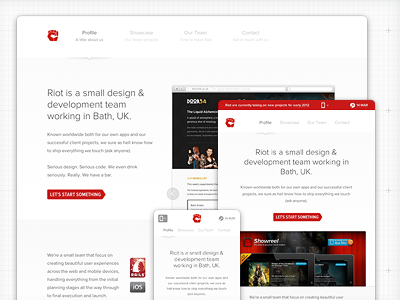 Image by Hector Simpson
Complexity of RWD demands Good Implementation
The performance issue that we’ve got pointed out, could be handled with solid implementation, however the inherent complexity of RWD (remember you’re designing it for multiple viewing experiences) make this implementation a challenging exercise. Even the foremost astute and experienced designers can falter throughout the strategy of implementation. As might possibly be imagined, this makes RWD a double edged sword. It’s not a straightforward and easy route towards online glory.
It’s expensive
Face the truth that a technology like RWD doesn’t come cheap. The sheer complexity of the design process means it’s expensive. As a business, you ought to be really very sure, you desire RWD. In the event you do commit to go ahead with it, you wish to also you’ll want to get a skilled designer to work in your project. With reference to every web designer professes to be a professional in RWD, but only a few designers can actually create and implement an internet site built using this design technology. Is that this a risk worth taking? Making a decision.
Trust in God, but in RWD? i’m really not sure whether it’s for everyone. i’m sure its adoption will continue to extend, but whether a business could be in a position to really up its profits with the adoption of RWD is truly debatable. It does have its shortcomings and these have the prospective to lay the spanner in its efficiency and future sustainability.
Here’s any other articles that you’ll definitely find useful.
17 Web Designs with Big Photography

Responsive Design: Getting it Right
15 Inspiring Portfolio Designs

13 Beautiful Design Agency Websites

15 Beautiful Texturized Web Designs

Posted in Web Design